

For decades, the data center industry relied on copper cables for shorter-run interconnects between servers, and fiber optics (light source from a laser like a VCSEL replacing electrical signal over copper) to move data over longer distances. AI and high-performance computing applications are changing this landscape. The amount of data being moved is shrinking the distance copper can cover, but optical cable bears a high up-front cost and consumes more power over short distances compared to traditional copper.
A new tech contender, originally designed for high-end TV displays, is in development as a mid-range bridge for AI data center networking: The microLED.
Here is how microLED technology is set to redefine networking, the players leading the charge, and when we can expect this technology to begin selling.
How microLEDs work in networking
1. The copper problem
Copper cables (Direct Attach Copper, or DAC) are the gold standard for short-range connections because they are cheap and consume almost no power. However, as data speeds hit 200G and 400G per lane, copper loses its effectiveness over distance. At these speeds, a copper cable can barely reach across a single server rack (about 1–3 meters) before the signal degrades. Copper active electrical cables (AECs) from the likes of Credo Technology (CRDO) and Astera Labs (ALAB) help solve this problem and extend the usability of copper.
2. The traditional optical problem
Traditional optical cables use VCSELs (vertical-cavity surface-emitting lasers) or silicon photonics. While these can travel long distances, they are complex to manufacture, and thus bear a higher up-front cost than copper. This problem is more pronounced with the co-packaged optics (CPO) technologies being developed by the likes of Nvidia (NVDA) and Broadcom (AVGO) along with TSMC (TSM). Optical cable also requires significant power to operate. In an AI cluster with tens of thousands of GPUs, the power consumed by networking alone can become a massive thermal and financial burden.
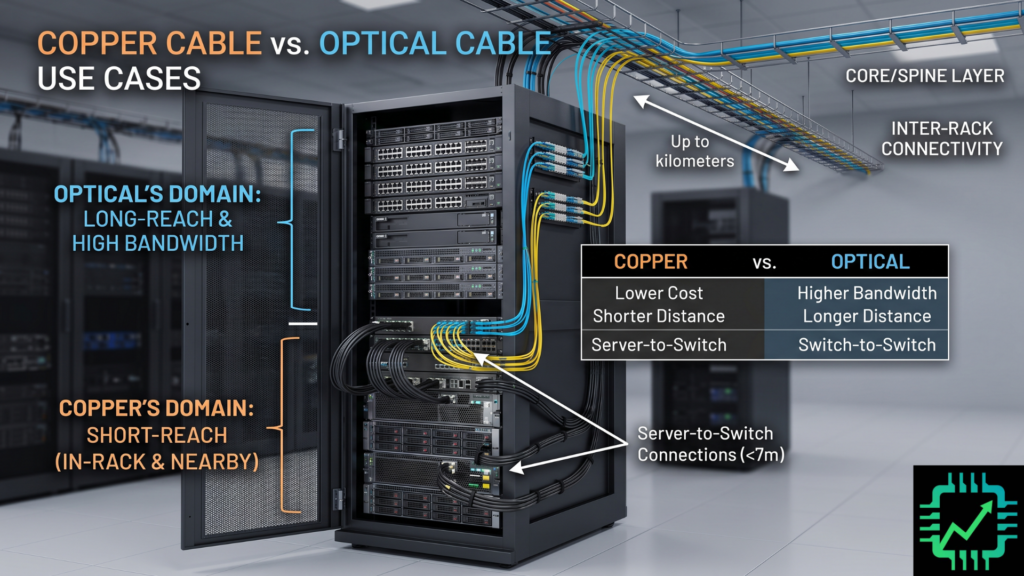
3. MicroLED bridging trade-offs between copper and optical
Like LEDs (light-emitting diodes) used in light bulbs, microLEDs are semiconductors that emit light when power is applied. In an LED, the electricity is efficiently converted into light energy when passing through a special semiconductor substrate like gallium nitride (GaN), gallium arsenide (GaAs), or some variation of compound semis materials.
MicroLEDs shrink the device size down to micron scale (the next largest unit of measure above nanometers), and can be assembled in an array to produce an intense light. In the context of networking, instead of using a power-hungry laser light source to send pulses of data across a fiber optic cable, a microLED array can be integrated with the assembly (transceivers, with digital-to-analog and analog-to-digital data conversion chips with light sources).
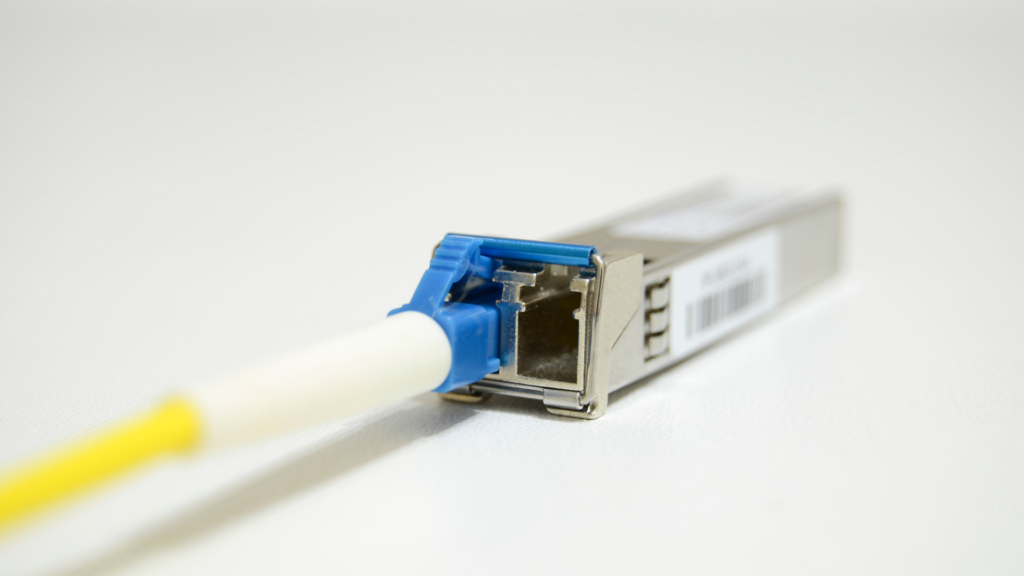
Because they are so small and can be packed tightly together, microLEDs allow for massive parallelism of light emission. The resulting light source isn’t as intense as a laser, but it’s more energy efficient. And because the light-based data transmission doesn’t degrade over longer-runs like copper, microLED is being positioned as a future middle-of-the-road trade-off between copper and traditional optical and photonics networking.
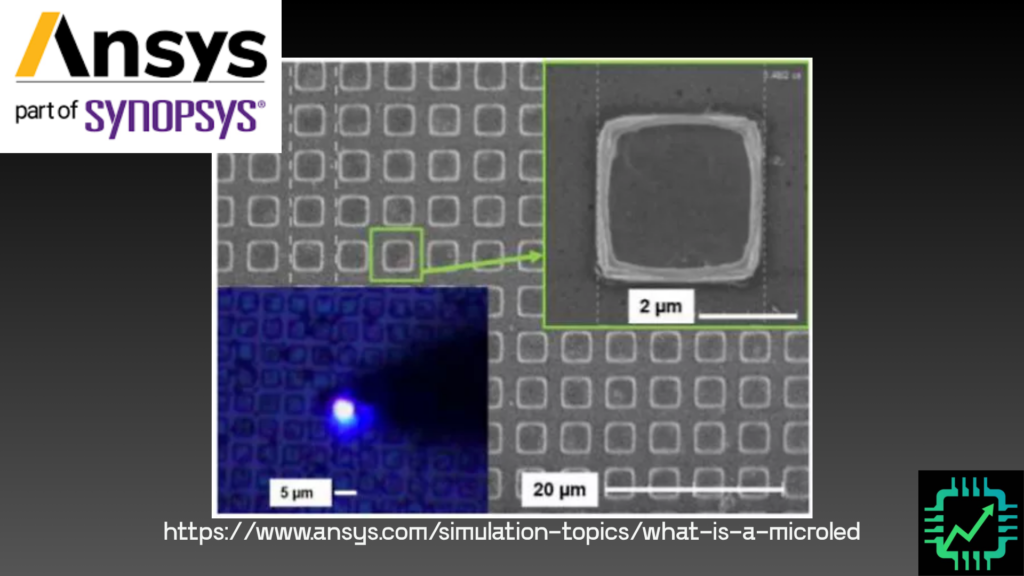
Image source: ANSYS / Synopsys https://www.ansys.com/simulation-topics/what-is-a-microled
The new titans of microLED networking
Recent industry moves show that the race to commercialize microLED networking is heating up. Three major collaborations are leading the way:
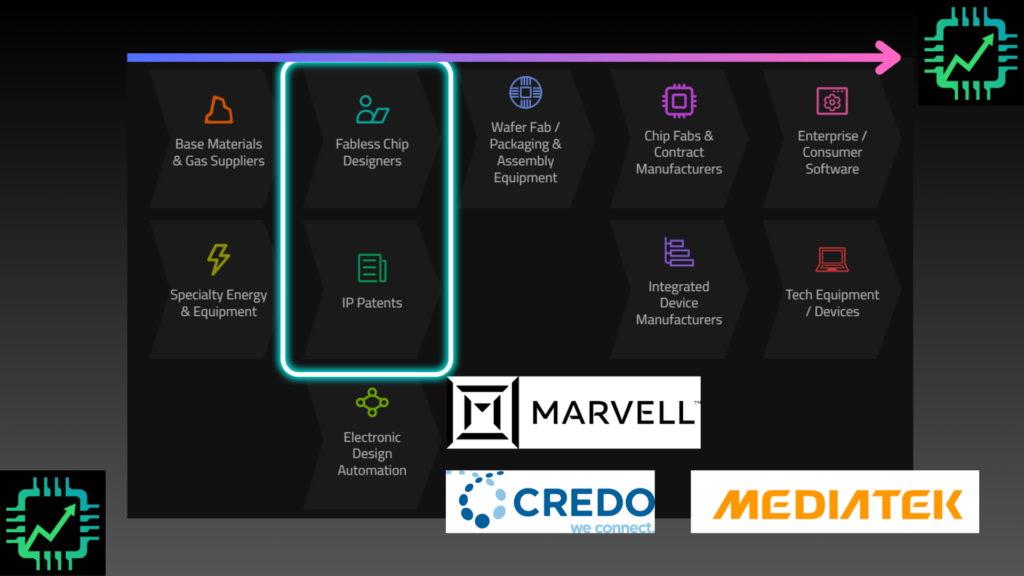
Credo and Hyperlume
In September 2025, Credo Technology announced its acquisition of Hyperlume, a startup specializing in microLED optical development. Credo intends to integrate Hyperlume’s “sub-picojoule” (ultra-low power) technology into its products to solve the power-density problems facing next-generation AI data centers. https://investors.credosemi.com/news-events/news/news-details/2025/Credo-to-Acquire-Hyperlume-Inc-/default.aspx
Credo admitted microLED could cannibalize some of its AEC copper cable business. However, subsequent to the microLED announcement, Credo also just announced its intent to acquire another startup, DustPhotonics, to simultaneously work on longer-range optical networking too.
Marvell and Mojo Vision
In March 2026, Marvell Technology (MRVL) said it is partnering with startup Mojo Vision to develop microLED connectivity. Mojo Vision was founded on development of smart contact lenses, but pivoted to microLED development for networking a few years ago. https://investor.marvell.com/news-events/press-releases/detail/1012/marvell-and-mojo-vision-collaborate-to-develop-next-generation-high-density-micro-led-connectivity-solutions
Marvell also completed the acquisition of “Photonic Fabric” startup Celestial AI in February 2026 to begin working on next-gen optical networking, from chip-to-chip interconnects to massive “East-West” (server-to-server) traffic in AI data centers.
MediaTek and Microsoft research
Less than a week after Marvell’s microLED announcement, MediaTek (TWSE:2454) and Microsoft (MSFT) announced a collaboration to develop and commercialize active optical cable (AOC) technology using microLEDs. The partnership pairs MediaTek’s chip-design prowess with Microsoft’s massive cloud infrastructure needs. https://www.mediatek.com/press-room/mediatek-develops-active-optical-cable-technology-with-microsoft-research-to-deliver-significant-improvements-in-data-center-efficiency
MediaTek has become much more than the mobile networking and consumer electronics chip designer of the past. It’s making inroads into the data center market in a number of ways, supplying IP to data center hyperscalers’ ASIC (application-specific integrated circuit) projects. Most notably, MediaTek is providing Alphabet (GOOGL/GOOG) some IP for its TPUs, alongside the main ASIC IP and design supplier for the TPU, Broadcom.
When will microLED arrive?
It’s still early days for the optical networking revolution, but microLED could very quickly shift the landscape. MicroLED is currently in the design and testing phase, and Credo in particular has said it will begin shipping samples of its AOCs in 2027. Scale-up of commercialization could begin in 2028.
Marvell and MediaTek/Microsoft have similarly stated late 2027 is the targeted launch for commercial sale of microLED optical technology.
The fast-changing landscape of AI data center suppliers and technology is great news for the data center operators themselves, and their AI software developer customers. More choice helps drive down the cost of building and operating infrastructure. This shift also presents opportunity for semiconductor suppliers in position to sell into a new market, and risk for incumbents that don’t move quickly enough.
We remain long Credo Technology and Broadcom.
Monitoring the fast pace of changes in the hardware cycle is what we do at Chip Stock Investor. Join us on Semi Insider to keep up with the conversation, unearth new opportunities, and get ahead of the crowd in assessing possible risks!

4 Responses
What about AMS OSRAM, they used to produce MicroLeds for Apple.
Hi Peter, did you see the follow-up to this article on Semi Insider? We did a brief write-up on ENNOSTAR, and called out AMS OSRAM as one of the competitors. AMS OSRAM could also be one of the companies developing microLED for use in data center networking.
Wow so cool to see this discussed – my capstone group is fabricating GaN microLED arrays for our project!
Nice! That’s quite the capstone project! Amazing experience!